transmission shaft
transmission shaft
transmission shaft
- 产品详情
- 产品参数
transmission shaft
Gear Transmission Shafts
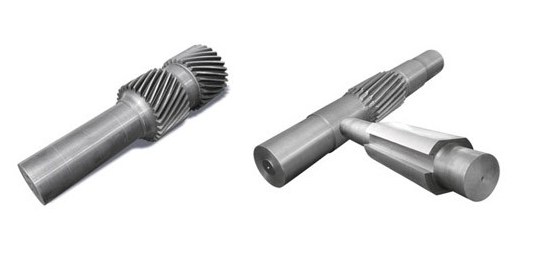
These are a set of integrated gear shafts (also known as transmission gear shafts), which are core components widely used in industrial gearboxes and reducers. They fall under the broader category of transmission shafts.
🔍 Structure & Key Features
- Monolithic DesignThe shaft body and gear teeth are machined from a single piece of material, rather than being assembled separately. This provides significantly higher structural strength, allowing them to withstand greater torque and impact loads compared to keyed or press-fit gear assemblies.
- Varied Gear Profiles
The left part shows a combination of a spiral bevel gear shaft and a helical gear shaft, typically used in reducers that require a change in the direction of power transmission.
The middle part is a spur/helical gear shaft, and the smaller part next to it is a splined shaft or coupling sleeve, used for power transfer and precise positioning.
- High Precision ManufacturingThese shafts are usually forged from alloy steel, then precision-machined through turning, gear hobbing, and gear grinding processes. They undergo heat treatment (such as carburizing and quenching) to achieve high surface hardness, ensuring excellent wear resistance and fatigue strength.
🛠️ Core Applications
They serve as the high-speed input shafts, intermediate shafts, or low-speed output shafts in gearboxes and reducers, responsible for transmitting torque and adjusting rotational speed.
Common in construction machinery, mining equipment, metallurgical machinery, automotive transmissions, and other industrial power transmission systems.